


LES EAUX FILIGRANES, Op. 43 for String Quartet and Wind Ensemble by OLIVIER PENARD (France, 1974)
- 2 days ago
- 5 min read
[#365] July 20, 2026
France | 2017 | String quartet and Wind Ensemble | Grade 6 | 30' | Solo Work – tone poem
This piece is available for purchase at Olivier Penard
Premiered by Coups de Vents Festival Orchestra conducted by Olivier Penard
on May 26, 2018 in Arras, France.
This piece is available for purchase at
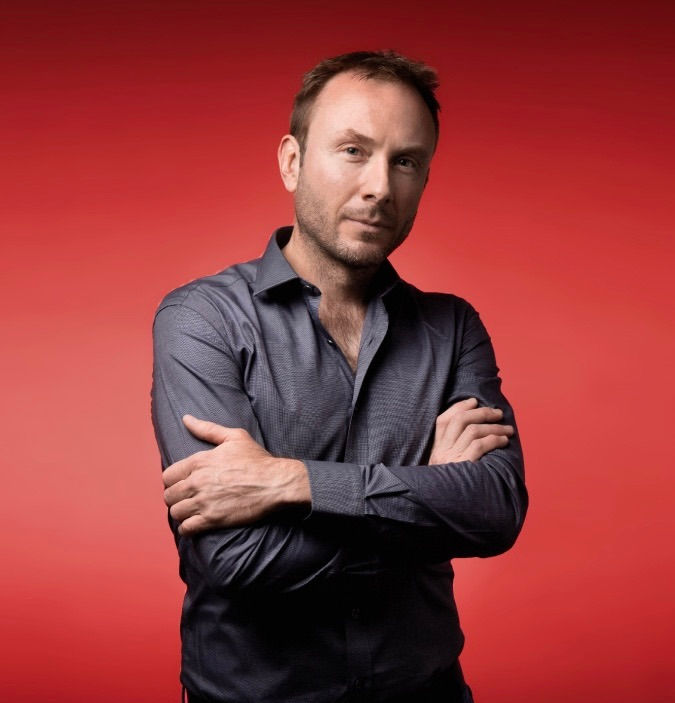
“Les eaux filigranes” by French composer and conductor Olivier Penard is our Composition of the Week.
Les eaux filigranes (could be translated as Filigree Waters) was composed in 2017 and premiered on May 26, 2018, in Arras, France, during the “Coups de Vents Festival” with the festival’s orchestra conducted by the composer.
The work unfolds in three continuous movements over a span of approximately thirty minutes, placing particular emphasis on richly layered textures and shimmering orchestral colors. It is scored for:
Instrumentation
• Piccolo
• 2 Flutes
• 2 Oboes
• 2 Bassoons
• E♭ Clarinet
• 6 B♭ Clarinets
• B♭ Bass Clarinet
• 2 E♭ Alto Saxophones
• 2 B♭ Tenor Saxophones
• E♭ Baritone Saxophone
• 4 F Horns
• 3 B♭ Trumpets
• 2 Trombones
• Bass Trombone
• 2 B♭ Euphoniums
• Tuba (C)
• Double Bass
• String Quartet
• Harp
• Piano
• Timpani (4 drums)
Percussion 1
• Glockenspiel
• Snare Drum
• Slapstick (Whip)
• Maracas
• Tambourine
• Triangle
• Vibraslap
• Wood Block (1)
Percussion 2
• Vibraphone
• Snare Drum
• Crash Cymbals
• Suspended Cymbal
• Slapstick (Whip)
• Tam-tam
• Triangle
Percussion 3
• Xylophone
• Tubular Bells (Chimes)
• Crash Cymbals
• Suspended Cymbal
• Tam-tam
• Triangle
• Wood Blocks (4)
Percussion 4
• Marimba
• Castanets
• Sizzle Cymbal
• Crash Cymbals
• Bass Drum
• Thunder Sheet
• Triangle
• Waterphone
“Les eaux filigranes” sets out to meet a dual challenge: to bring together two seemingly opposing ensembles within a work that pays homage to the language of Claude Debussy without imitating it outright. Thus, was born this project of a symphonic poem in the form of a concerto for string quartet and wind orchestra. From the concerto tradition, the work retains only the division into three connected movements. In addition, the use of a triple scale system (chromatic, whole-tone, and diminished seventh) gives rise to a specific mode whose transpositions are limited, ensuring the unity of the entire piece. The largest movement of the work, “Eaux mêlées” (Intermingled Waters), unfolds through a rigorous harmonic progression that gradually intensifies from the opening, almost chamber-like measures to a full orchestral fortissimo. Here, the string quartet and orchestra form an inseparable sonic substance in which the usual hierarchy of concerto writing is absent. The movement is permeated by melismatic passages that are by turns poetic and mysterious, where the sensuality of the melodic lines generates a kind of tense nostalgia. The principal mode is heard either in its simplest form or superimposed upon its own transpositions. Tonality, modality, and even polytonality thus combine naturally until reaching a state of saturation. It is then that “Eaux duales” (Dual Waters) emerges. The only allegro of the work, the music immediately introduces thematic ambivalence as well as metric alternation, both of which sustain the entire movement. From the scherzo, the music retains ternary energy and fantastical swirling gestures, where virtuosity is shared equally between quartet and orchestra. From the binary allegro, it preserves the vigor of counterpoint, the precision of rhythmic contours, and the direct dynamism of orchestral impacts. Gradually, the string quartet begins to separate itself from the orchestral mass without yet assuming the role of true soloist. The movement ultimately concludes with a large orchestral interlude in which all instrumental forces are fully engaged in a grand thematic recapitulation with the character of a bacchanalian celebration. The final movement, “Eaux mémorielles” (Memorial Waters), suddenly imposes silence and works through the idea of remembrance. Out of this abrupt interruption emerges a very brief triplet motif (entrusted to the cello of the quartet), whose function remains unclear at first. Later, the four soloists finally assume a predominant role, giving rise to a long slow movement in which bittersweet expressivity invites contemplation. Gradually, the orchestra is reintroduced, and the opening triplet figure finally reveals its secret by quoting the final chorale of La Mer. The work then concludes in a vast peroration imbued entirely with light and serenity. Program notes by Olivier Penard
It was through cinema that Olivier Penard, born in 1974, first discovered music. A self-taught composer, his catalogue reflects a deep concern for narrative, the evocation of imagery, and the structuring of sequences.
A meticulous craftsman and demanding creator, he composes music situated at the crossroads of contemporary creation, minimalist currents, jazz, and film music.
In an era where genres, styles, and artistic boundaries increasingly overlap, he seeks to forge a personal synthesis between heritage and innovation: sensual and luminous harmony, richly colored timbral combinations, powerful rhythmic energy, and strong dramatic density characterize the many facets of his works, which encompass orchestra, solo and choral voice, chamber music, theatre, dance, and cinema.
Penard has collaborated with performers such as Quatuor Debussy, Ensemble Contraste, Jonas Vitaud, Sonia Wieder-Atherton, Orlando Bass, Geneviève Laurenceau, Fabrice Bihan, Ayako Tanaka, Jean-Marc Fessard, Dana Ciocarlie, and Patrick Langot.
He has also worked with singers including Dame Felicity Lott (United Kingdom), Ariane Douguet, Christophe Crapez, and Matthieu Lecroart (France), Stacie Dunlop (Canada), and Stephan Van Dyck (Belgium).
His works have been performed, among others, by the national orchestras of Lyon, Lille, and Mulhouse (with Andreas Ottensamer), Montpellier (Fabien Gabel), Toulouse (Christophe Mangou), Avignon (Léo Margue, Samuel Jean), the Orchestre National des Pays de la Loire (Jordan Gudefin), Orchestre Divertimento (Zahia Ziouani), the Orchestre National d’Île-de-France, the Flemish Radio Choir and Orchestra, Jeune Chœur de Paris (Laurence Equilbey), Les Cris de Paris (Geoffroy Jourdain), and Sequenza 9.3 (Catherine Simonpietri).
Alongside composition, he has developed a parallel career as both conductor and record producer. He also teaches composition, orchestration, and music culture at the conservatories of the City of Paris.
A former artist-in-residence at Abbaye de la Prée, he is currently a laureate of the Fondation Banque Populaire.
Following the premiere of his Second Symphony in 2024 — a commission from the Consortium Créatif, bringing together the orchestras of Avignon, Cannes, Mulhouse, Brittany, and Picardy — he is preparing the release of a new recording devoted to the complete collection of his art songs for voice and piano. Looking further ahead, he is currently working on an oratorio for soloists, choir, orchestra, and grand organ entitled The Resurrection of Lazarus.
Olivier Penard’s scores are published by Artchipel, Éditions Jobert, and Rubin Éditions Musicales.
Other works for winds include:
• Suite du Bateleur (for brass ensemble) (2003)
• Divertimento (for saxophone quintet and ensemble) (2003) Op. 16a
• Prime Time (for Wind Ensemble) (2008)
• Divertimento (for Wind Ensemble) Op. 16b (2025)
• Triptyque (for trombone ensemble) (2025)
More on Olivier Penard


